
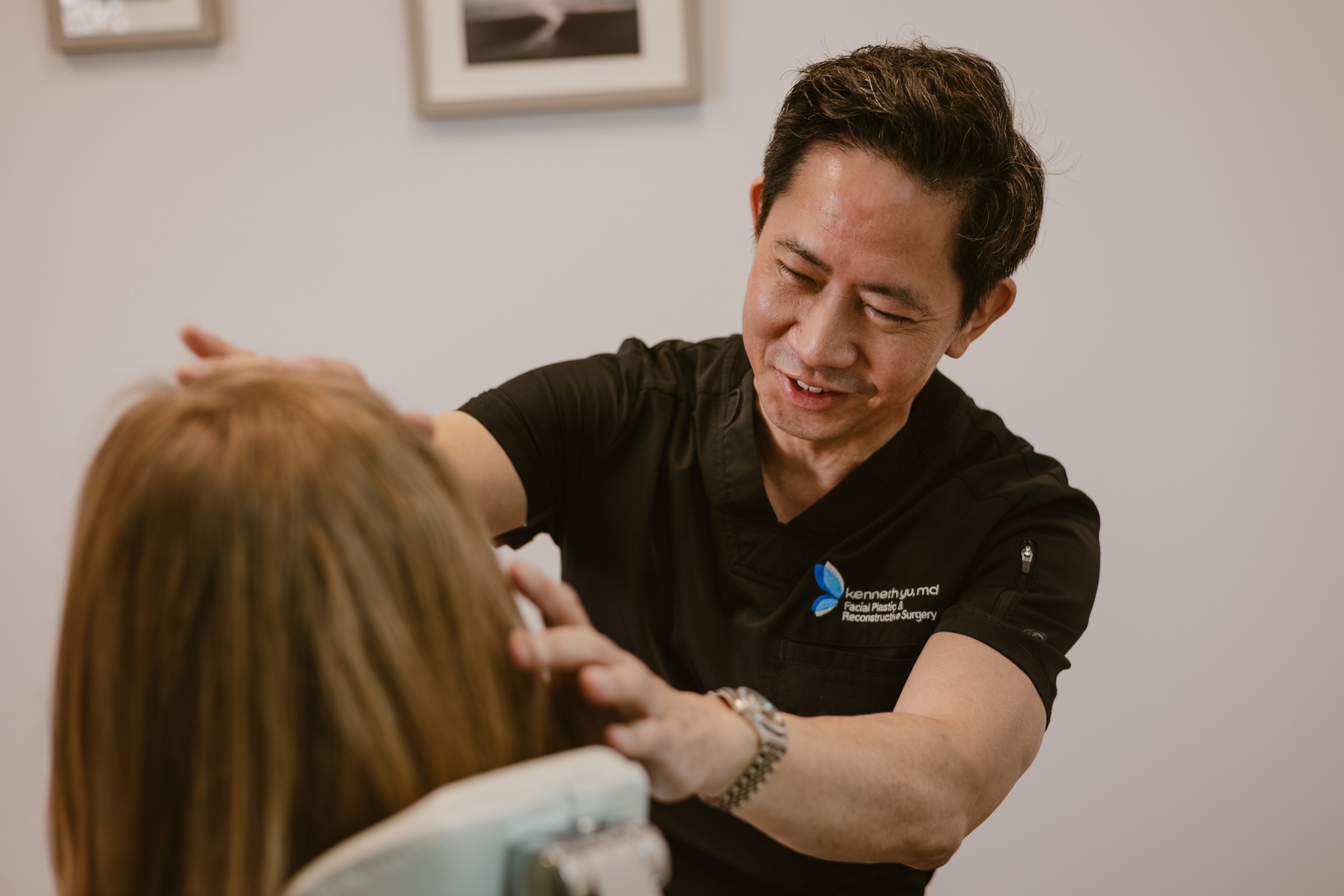
Surgical · Face · Rhytidectomy
Facelift Surgery
in San Antonio.
Overview
Ch. 01 — 09
Overview
A facelift does far more than pull your skin tight. The procedure repositions the deeper structural layer of your face, the one that loosens and drifts downward as collagen and elastin fade with age. When that foundation is lifted and secured, jowls soften, the jawline sharpens and the mid-face regains the fullness that gravity slowly borrows. Skin-only lifts, the kind that gave facelifts their old “windswept” reputation, never lasted because the skin stretches. Modern facelift techniques correct the anatomy underneath.
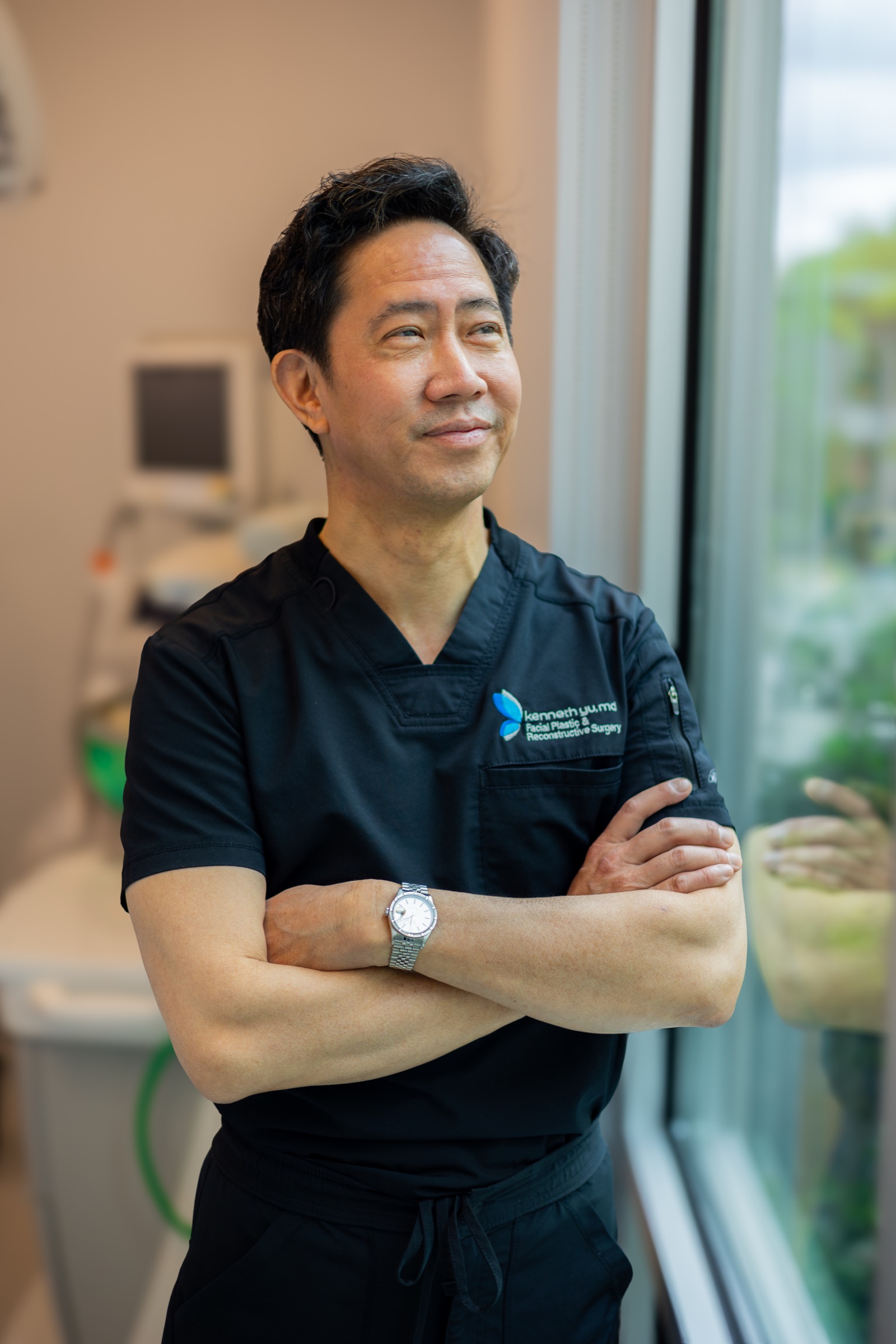
Dr. Kenneth Yu is a double board-certified facial plastic and reconstructive surgeon who has practiced facial plastic surgery since 2010. He focuses his San Antonio practice exclusively on facial and neck procedures. That narrow focus, paired with more than 20 years of surgical experience in the U.S. Air Force, is what allows him to deliver results that look refreshed rather than operated on.
What It Addresses
Ch. 02 — 09
What can a facelift
address?
If you catch yourself pulling back the skin along your jaw in the mirror, wondering where your younger contour went, a facelift is likely what you are picturing. Also known as rhytidectomy, it remains the most comprehensive way to treat aging across the mid-face, jawline and neck. Patients who choose the procedure with Dr. Yu can expect:
A facelift will not turn you into someone else. Done well, it restores the version of your face you remember, and it holds that correction for years.
- 01Firmer, smoother skin across the mid to lower face
- 02Repositioned fat and tissue for renewed fullness in the cheeks and mid-face
- 03Softened deep folds and creases around the mouth
- 04A sharper, more defined jawline
- 05Elimination of jowls along the lower face
- 06Reduced fullness beneath the chin
Candidacy
Ch. 03 — 09
Who is a good
candidate?
The strongest facelift candidates are in good overall health and want to correct sagging that no longer responds to creams, injectables or in-office treatments. Loose skin along the jaw, deepening folds around the mouth and jowls that blur a once-defined jawline are the changes a facelift addresses best. Realistic expectations matter as much as anatomy. A facelift restores a firmer, more rested version of your own face, and Dr. Yu will talk you through what surgery can and cannot do during your consultation.
Your health history can also affect your candidacy, including certain medical conditions and medications. And because nicotine interferes with anesthesia and slows healing, those who smoke or vape must be willing to stop for at least several weeks before and after surgery.
Not There Yet?
Not everyone who wants a facelift needs one yet. If your laxity is mild, Dr. Yu may first point you toward nonsurgical options like dermal fillers or laser skin resurfacing, or toward a mini facelift as a lighter alternative.
Recommending the right amount of treatment, rather than the most, is central to how he practices.
Dr. Yu’s Approach
Ch. 04 — 09
It comes down
to the SMAS.
If you read through any facelift ad, you will likely drown in branded names: the S-lift, the Y-lift, the MACS lift, the deep plane facelift. Dr. Yu is candid that most of these are clever marketing wrapped around techniques already published in the medical literature. The question worth asking any plastic surgeon is not which trademarked lift they perform but, instead, how they handle the key structure underneath your skin: the SMAS, or superficial musculoaponeurotic system.
The SMAS is the layer of muscle and connective tissue that sits beneath the skin and connects to the platysma muscle of the neck. As it weakens, your face loses its heart shape and squares off along the jaw. A surgeon who only tightens skin is fighting a losing battle, since skin has no lasting memory. By lifting and securing the SMAS itself, Dr. Yu addresses the actual source of sagging, which is why his results endure.
The Different SMAS Techniques
There is more than one way to address the SMAS, and the approaches range from simpler to more advanced. In the more straightforward methods, the surgeon tightens the SMAS by folding it onto itself with sutures or by removing a small section and stitching the edges together. These carry a lower risk to the facial nerve and work well for many patients. The more advanced approaches lift the SMAS as a flap and release it from the ligaments that hold the face down, which allows a stronger, longer-lasting lift. The best-known version is the deep plane facelift.
DR. YU’S PREFERRED TECHNIQUE
Extended SMASplasty (high SMAS lift)
Dr. Yu prefers a related technique called the extended SMASplasty, or high SMAS lift, which repositions the deeper tissue and the skin in separate directions for a result that looks natural and can last up to a decade. You can read about the technical differences between his SMAS techniques in his blog on facelift types.
Facelift vs. Mini FaceliftFacelift vs. Mini
Ch. 05 — 09
Two lifts,
one decision.
Dr. Yu performs two primary versions of facelift surgery, and the right one depends on how far your signs of aging have progressed. A traditional SMAS facelift treats moderate to severe aging across the face and neck. A mini facelift targets earlier, milder laxity in the lower face through shorter incisions. Here is how they compare.
A mini facelift can also delay the need for more extensive surgery, which appeals to patients who want to get ahead of aging rather than wait it out. Dr. Yu breaks down who benefits most in his blog on reasons to consider a mini facelift.
| Comparison | SMAS Facelift | Mini Facelift |
|---|---|---|
| Best for | Moderate to severe signs of aging in the cheeks, around the mouth, along the jawline and in the neck | Mild to moderate sagging in the lower face and jawline that’s too advanced for injectables |
| Incisions | Along the hairline near the temples, down the front of the ear to the jawline | Shorter, placed along the hairline and just past the ears |
| Recovery | Roughly one to two weeks before returning to routine | As little as three to five days for many patients |
| Longevity | Up to 10 years | Roughly two to six years |
| Results | More dramatic, longer lasting | Subtler, with less downtime |
SMAS Facelift
Mini Facelift
Your Facelift Journey, Step by StepYour Journey
Ch. 06 — 09
Your Facelift Journey, Step by Step
-
01
Your Facelift Consultation
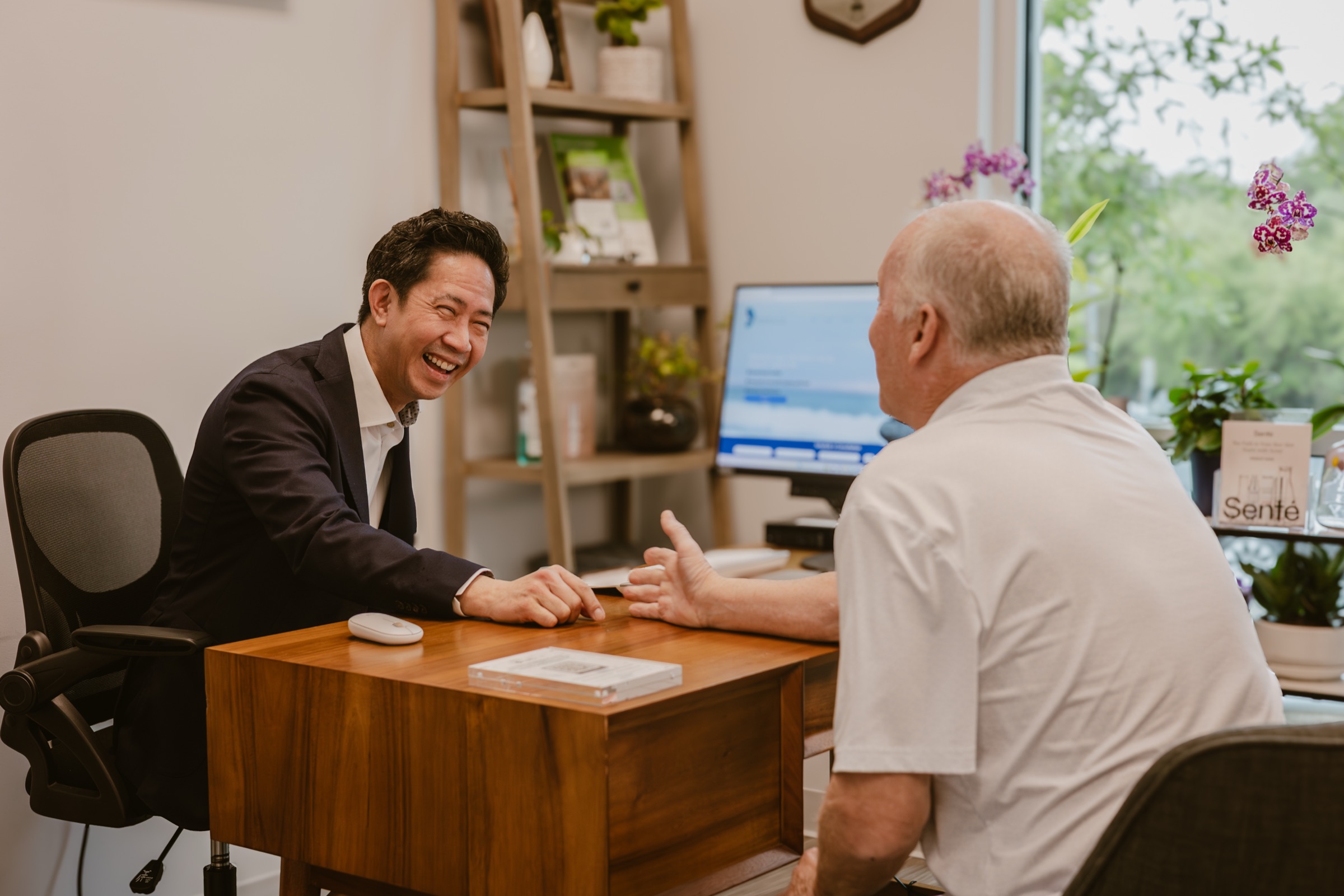
Dr. Yu takes a thorough history of your concerns, including when your signs of aging first bothered you and what treatments you have tried. He then examines the structures contributing to what you see in the mirror. Your neck receives particular attention, since loose skin, excess volume under the chin and the position of the glands beneath the jaw all shape the surgical plan. Photographs are taken so you and Dr. Yu can objectively review your face and discuss your options together.
Even though you are coming in for a cosmetic change, the consultation is also a medical evaluation in which Dr. Yu reviews your health history, current medications and any nicotine use. For more information on what to expect at your consultation, read his guide to getting a facelift.
-
02
Preparing for Surgery
Once you decide to move forward, Dr. Yu sends you home with preoperative instructions. Depending on your health, you may need lab work, adjustments to certain medications and your skincare regimen, and a pause on alcohol, smoking/vaping and anti-inflammatory drugs or supplements that could complicate healing. Following these instructions closely promotes the safest, smoothest surgery possible.
You should also arrange for a trusted family member or friend to drive you home and help you through the first day of recovery. One of the most practical things you can do beforehand is build a recovery station within arm’s reach of where you plan to rest, so you are not twisting or straining to grab what you need. Stock it with your phone and laptop chargers, water and easy snacks, any prescribed medications, plus extra pillows to keep your head elevated. Keep your remotes, headphones and a tablet or book close by, too, along with anything else that keeps you comfortable and still.
-
03
Facelift Surgery Day
A facelift is an outpatient procedure performed at Dr. Yu’s accredited surgical facility. Surgery generally runs two to five hours, depending on the technique and whether you are combining procedures.
Dr. Yu uses total intravenous anesthesia or sedation rather than general gas anesthesia, offering IV, oral and local options based on the extent of your surgery and your comfort. Sedation means a quicker return to feeling like yourself, with less nausea afterward. During the procedure, he separates the skin from the tissue beneath, repositions and secures the SMAS, trims away excess skin and closes the incisions so they hide within your hairline and the natural creases around your ear.
Your recovery
timeline.
Recovery is gradual, and knowing its rhythm can help you plan. Here is the general arc for a traditional/SMAS facelift, with a mini facelift moving faster at every stage.
First 24–48 hours
Expect mild discomfort, swelling and bruising in the treated areas. Ice packs, over-the-counter pain relief and sleeping with your head elevated all help. Rest is the priority.
Week one
Swelling begins to settle, and you grow steadily more mobile. Many mini facelift patients feel ready for light daily activity within three to five days.
Weeks two to four
Most traditional facelift patients are back to their normal routines within one to two weeks. Strenuous exercise stays off the table for at least a month so your face can heal fully.
Months two to three
Residual swelling continues to fade, and the facial shape you will keep starts to come into focus.
Your Results
Final results from a traditional facelift usually appear within three to four months, once the last of the swelling resolves. Many patients enjoy their outcome for up to a decade, though no surgery stops the clock entirely. How well you protect your skin afterward, with sun protection and a sensible skincare routine, plays a real part in how long your facial rejuvenation holds. Dr. Yu offers surgical and nonsurgical options to help you maintain your results if aging catches up sooner than you would like.
Combining Your FaceliftCombinations
Ch. 07 — 09
One recovery,
a harmonious result.
Many patients treat more than one facial area at once, which means a single recovery and, often, a more harmonious overall result. Dr. Yu will map out any combination procedures during your consultation. A neck lift is the most common pairing with facelift surgery.
Neck lift & neck liposuction
Dr. Yu frequently pairs a facelift with a neck lift or neck liposuction to refine the jawline and reduce fullness under the chin.
Rhinoplasty
A facelift restores contour, but it cannot change your nose. Rhinoplasty balances the profile for patients who want the whole face to feel proportional.
Brow lift
A brow lift carries your results into the upper face, so your forehead matches the freshness of the lower two-thirds of your face.
Chin implant
For a jaw that always lacked definition, a chin implant strengthens the profile that a facelift reveals.
Eyelid surgery
Blepharoplasty removes excess skin and fat around the eyes and pairs naturally with the smoother look a facelift creates.
Otoplasty
Ear pinning can be worth addressing at the same time, since the ears sit right within the surgical field.
Why Patients Choose Dr. Yu
Ch. 08 — 09
Credentials that
hold up.
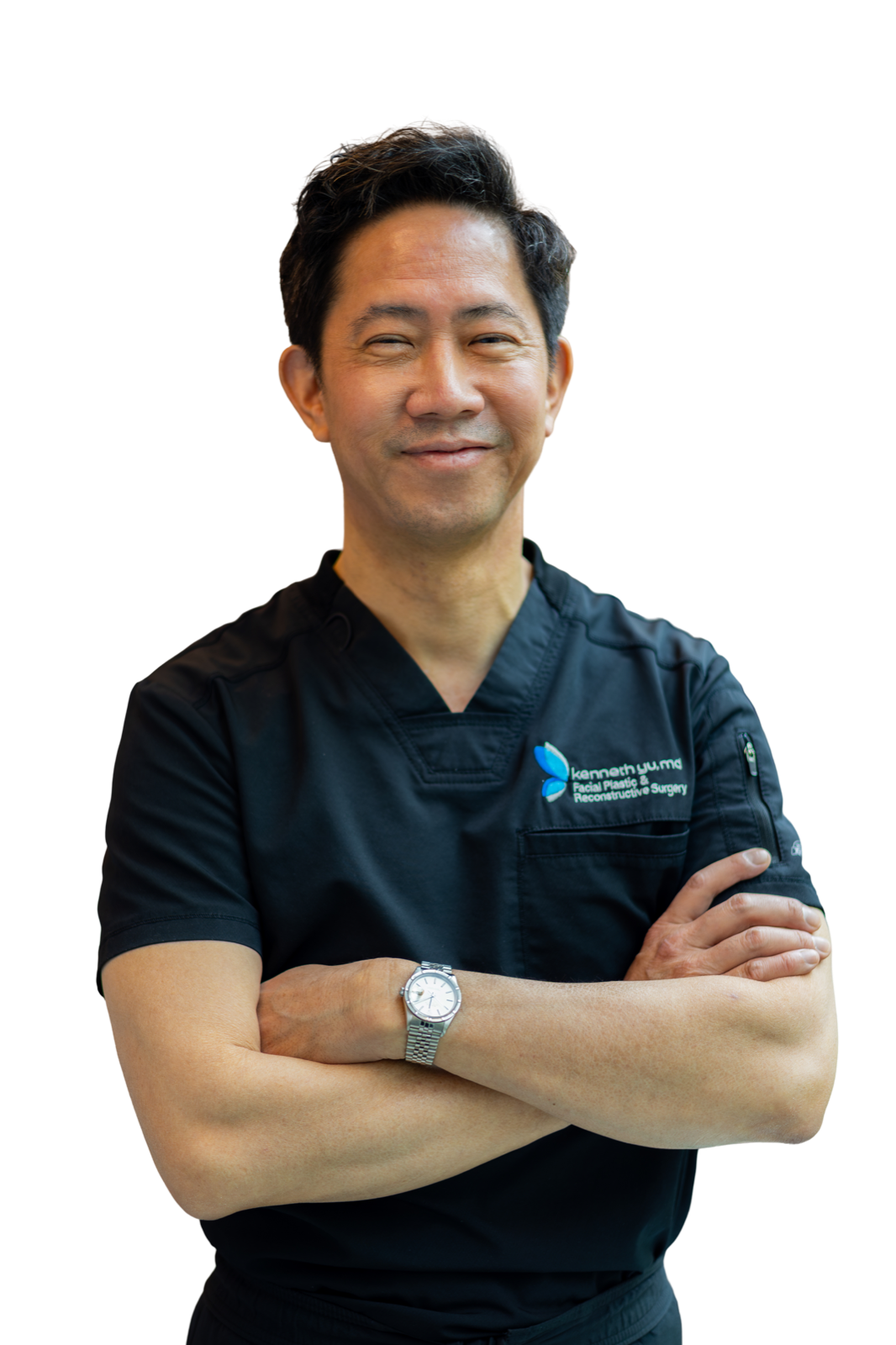
Dr. Kenneth Yu is one of the few San Antonio surgeons who is double board-certified in facial plastic and reconstructive surgery and in otolaryngology (head and neck surgery). He completed his fellowship in facial plastic and reconstructive surgery under Dr. Corey S. Maas and Dr. Sheldon Kabaker, two internationally recognized surgeons in the field. He also served in the U.S. Air Force for more than 20 years, where he performed surgery on the front lines and earned the Meritorious Service Medal, the Air Force Commendation Medal and the Army Commendation Medal along the way.
Dr. Yu’s San Antonio practice specializes in face and neck procedures, performed in his own private surgical facility rather than a hospital. That setup gives patients real privacy and the freedom to schedule on their own timeline. The facility is accredited by the American Association for Accreditation of Ambulatory Surgery Facilities (QUAD A), which means the operating room meets rigorous national safety standards.
The team at Dr. Kenneth Yu Facial Plastic & Reconstructive Surgery treats patients like family, so you can work through the highly personal decision of getting plastic surgery at your own pace, with people who actually know you.
Double board-certified
Fellowship-trained · Maas & Kabaker
Private QUAD A–accredited facility
Facelift Consultation
Ready to see your younger
facial contour again?
If aging has started to blur the face you recognize, a consultation with Dr. Yu will tell you exactly what is possible. His practice serves patients across San Antonio, Austin and the surrounding Texas communities. Call 210-876-6868 or contact us online to book your visit.
Facelift FAQs
Ch. 09 — 09
Facelift FAQs
The total cost of facelift surgery varies from patient to patient, since every treatment plan is different. The main factors include the extent of your surgery, the technique used, anesthesia and facility fees, any additional procedures or skin treatments, and post-surgical supplies. Facelifts are generally not covered by insurance, but we offer several financing options to make the procedure costs more manageable. The most accurate number comes from a consultation, where Dr. Yu can price your specific facelift plan. When weighing costs, remember that a surgeon’s credentials and track record matter more than finding the lowest fee.
A traditional facelift can last about 10 years, and a mini facelift roughly two to six years. Aging continues after surgery, but your face will always look younger than it would have without the procedure. Good skincare and sun protection will help extend your results.
There is no minimum age that qualifies a person for a facelift, and there is no single right moment to have one. Genetics drives much of how you age, so the timeline runs across a wide spectrum. Some people notice sagging in their 40s, others not until their 60s. What matters more than the calendar is how the changes make you feel when you look in the mirror.
A traditional facelift improves the upper neck and jawline because the SMAS connects to the neck’s platysma muscle. For more significant neck concerns, Dr. Yu often adds a neck lift or neck liposuction.
Incisions are placed within the hairline and the natural creases around the ear, which keeps scars well-hidden from ordinary view. They continue to fade over time.
A liquid facelift is a nickname for a set of nonsurgical treatments, such as injectable fillers and Botox, that soften mild signs of aging. These options suit patients who want to avoid surgery, though they cannot match the correction a surgical facelift provides.